

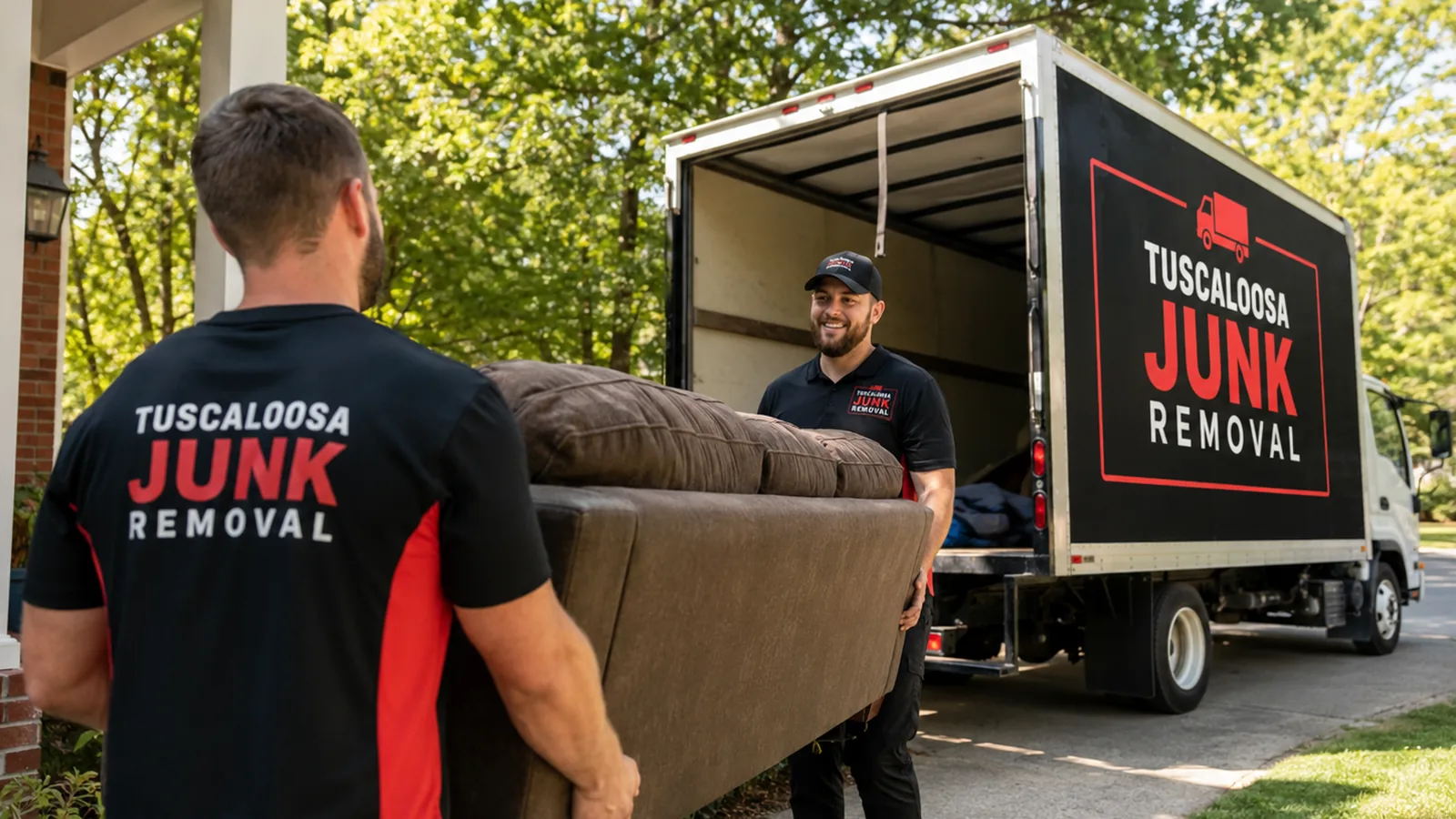
Room-of-choice furniture pickup for pieces that are too heavy, awkward or time-sensitive for ordinary curb service, including apartment move-outs, replacements, estate work and business changes. The details below explain what affects the job, what to prepare and what to confirm before the crew starts loading.
Common furniture removal situations
New furniture delivery
Remove the old couch, mattress or dining set before the replacement arrives so the room and entry path are clear.
Apartment move-out
Avoid leaving bulky pieces beside a dumpster or blocking a shared hallway when a lease deadline is approaching.
Estate or downsizing project
Remove approved rooms in phases after family members have identified keepsakes, documents and donation candidates.
What can be included in furniture removal
Common items are listed below. Include unusual, extra-heavy or regulated material in the quote request so it can be reviewed before scheduling.
What changes the price and work plan
The final quote depends on the real load and the work required to move it. Confirm the complete scope and price before loading begins.
| Factor | Why it matters |
|---|---|
| Size and construction | A lightweight chair is different from a sleeper sofa, solid-wood armoire, pool table or glass-front hutch. |
| Floor and stairs | Upper floors, narrow staircases and long hallways increase labor and may require extra crew planning. |
| Disassembly | Sectionals, bed frames, desks and large tables may need to be separated before they can leave the room. |
| Parking distance | Downtown loading zones, apartment lots and campus-area traffic can create longer carrying routes. |
| Condition and destination | Clean, usable furniture may qualify for donation, while stained, broken or pest-affected items usually require disposal. |
How to plan the job without surprises
Identify every piece
Photograph the full item and list whether it reclines, converts to a bed, contains glass, or is solid wood. Those features affect handling.
Map the exit path
Measure tight doorways, stair turns and elevator openings. Note whether legs, doors or sections can be removed without damaging the piece or property.
Empty furniture completely
Remove clothing, papers, valuables, electronics and hidden contents from drawers, cabinets and sleeper-sofa compartments.
Protect the handoff
Clarify which pieces stay, which go and whether the hauling team will perform basic disassembly. Confirm the price again if the item list changes.
Local details that affect this service
Furniture jobs cluster around late-summer apartment turnover near the University area and 15th Street, but they also come from home renovations in Forest Lake, Woodland Hills, Lakeview and the 35406 corridor. Downtown and campus-area buildings may require elevator reservations or short loading windows.
The City lists old furniture among acceptable residential trash items for active customers, but City pickup still requires curb placement and route timing. Private pickup is useful when the piece is inside, the move-out deadline comes first, the property is multi-family or commercial, or the quantity exceeds what can be staged safely.
For a sectional, photograph the entire configuration and each connection point. For a sleeper sofa, identify it specifically. For a cabinet or dresser, confirm that every drawer is empty before the crew begins.
Current reference links: City garbage and trash guidance · University enrollment facts · City student move-out notice. Check current municipal rules before relying on curb collection.
Five ways to make the pickup smoother
- Empty all drawers, shelves and hidden compartments.
- Remove bedding, slipcovers and loose cushions unless they are also being discarded.
- Photograph stair turns and narrow doorways for oversized pieces.
- Tell the hauling team about bed bugs, fleas, mold or heavy staining before arrival.
- Secure pets and remove wall décor from the carrying path.
Items and conditions outside a standard request
Call out unusual, hazardous or regulated material before scheduling so the crew can confirm what can be handled safely.
- Pianos, safes and specialty equipment without advance review
- Furniture containing unknown chemicals or medical waste
- Items still filled with personal property
- Pest-infested pieces not disclosed before scheduling
- Built-in cabinetry that requires demolition rather than simple disassembly
Responsible handling without false promises
Donation is most realistic for clean, structurally sound furniture without major stains, odors, tears or pest concerns. Acceptance can change daily, so the hauling team should never promise a donation result before a receiving organization approves the piece. Upholstered furniture that is damaged or contaminated may need direct disposal.
Furniture Removal FAQs
Can a couch be removed from an upstairs apartment?
Often yes, but the hauling team needs photos of the couch, stairs, landings and doorway clearances. Sleeper sofas and large sectionals should be identified in advance.
Will the crew disassemble furniture?
Basic disassembly may be available for items such as bed frames, table legs and sectional connections. Confirm what is included before the appointment.
Can usable furniture be donated?
Possibly, if the item is clean, safe, structurally sound and accepted by a local organization. Donation cannot be guaranteed from photos alone.
Does the furniture need to be outside?
Usually not for full-service removal. Explain whether the item is in a bedroom, basement, garage, balcony or office so labor and access can be quoted correctly.
How should I prepare a dresser or cabinet?
Remove every item, check hidden compartments, unlock doors and drawers, and secure any removable glass. Do not leave valuables or documents inside.
Can furniture be picked up before a lease ends?
Yes, availability permitting. Include the exact deadline, building access rules and whether an elevator or loading area must be reserved.